A receding hairline changes the geometry of every haircut, and the styles that fail are the ones pretending it has not. Long fringes swept forward from far back, heavy tops combed over the temples, and lengths kept from a decade ago all draw the eye to exactly what they are trying to hide. At Gaston Barbers in Gastonia, the conversation that works is a comparison: lay the genuine options side by side, with their costs, and pick by where your hairline actually is, not where it was.
Recession usually progresses at the temples first, deepening the corners and forming a more pronounced peak at the center, and later thins at the crown as well. Each stage has a best answer, and the answers share one principle: shorter and more textured reads stronger than longer and arranged. The table below does the heavy lifting, and the sections after it explain how to judge your stage honestly.
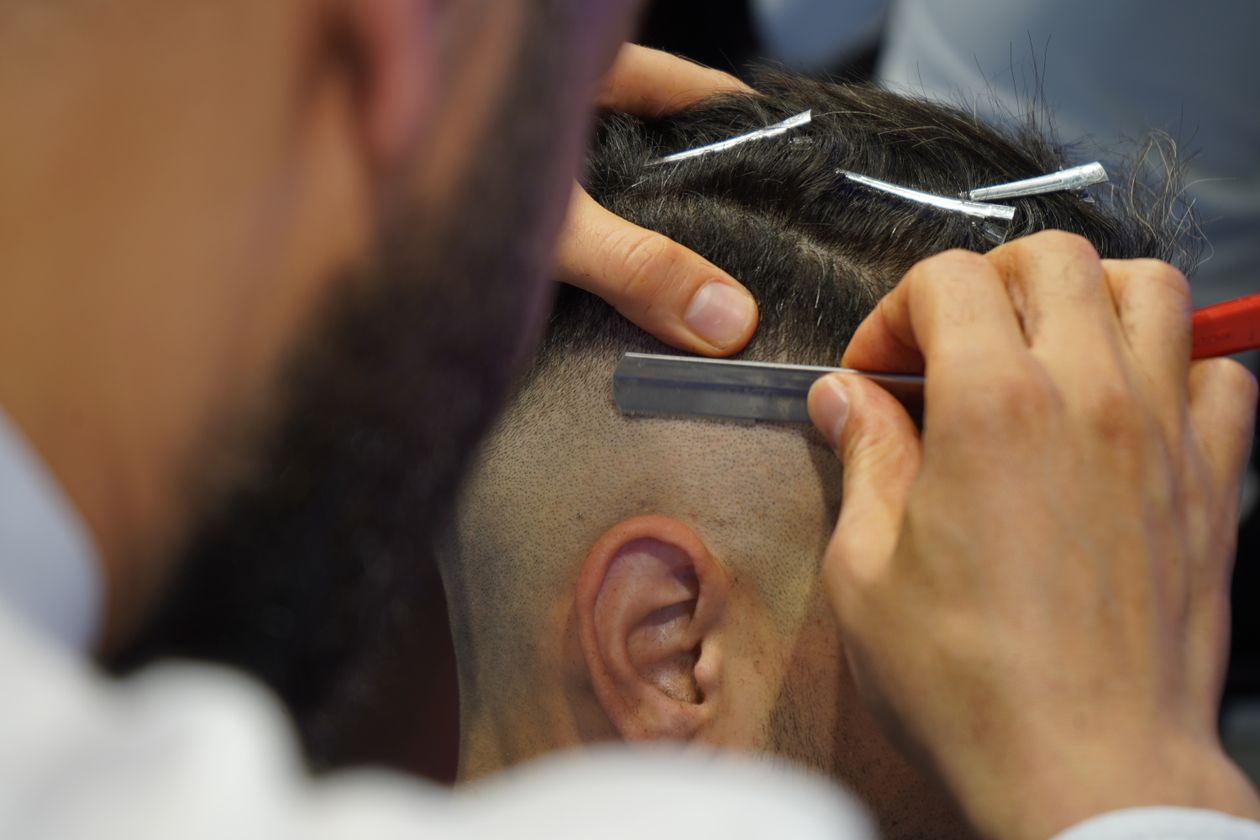
The options, honestly compared
Shorter sides with texture on top is the workhorse option for early to moderate recession. Tight sides remove the contrast between full side hair and thinner temples, and a textured, forward or natural top avoids a fringe line that exposes the corners. It asks for a normal barber rhythm and minimal styling, and it adapts as recession continues by gradually taking the top shorter over the years.
The buzz, at various short lengths, is the endpoint option and often the most confident-looking one once recession is advanced. It removes the comparison between covered and uncovered areas entirely. Its costs are real: head shape and scalp become the look, sun protection becomes a daily duty in North Carolina, and the cut wants refreshing every two to three weeks to stay deliberate rather than grown-out. Between the two sit the fringe-forward crop, which covers early temple recession well, and the classic short taper, which suits men whose recession is mostly at the corners with a strong center.
| Option | Best stage | Upkeep | Main trade-off |
|---|---|---|---|
| Short sides, textured top | Early to moderate | Cut every 3 to 4 weeks, light matte product | Top shortens gradually over the years |
| Forward crop with fringe | Early, temples mainly | Cut every 4 weeks, minimal styling | Fringe line fails as corners deepen |
| Classic short taper | Moderate, strong center | Cut every 3 to 4 weeks, comb only | Less coverage if crown thins too |
| Buzz, uniform short | Advanced | Refresh every 2 to 3 weeks, daily sun care | Head shape and scalp become the style |
Judging your stage without flattery
Use photographs, not memory. A front photo in plain light today, compared with one from three years ago, shows the corners' true position. Barbers judge by the same evidence and can tell you which option your current stage supports. Ask directly and invite a direct answer: a professional who sees hundreds of hairlines a year will not be shocked by the question, and their staging advice is the most useful free information in the shop.
Also weigh the maintenance truthfully. A style that needs careful arranging to disguise recession will fail on windy days, at the gym, and in the pool, and each failure advertises the effort. Styles that work with the hairline look the same in all those settings. Durability in real life is worth more than a clever arrangement that only survives the bathroom mirror.
Making the transition in steps
Few men need to jump straight to the buzz. The usual path shortens gradually: the fringe gets shorter and more textured, the sides tighten, and one year the difference between the styled cut and a long buzz is small enough that trying the buzz becomes a low-risk experiment, best done in a season when a hat is unremarkable if you dislike it. Hair grows half an inch a month, so even a disliked buzz is a few weeks from being a short crop again.
What does not work is delay disguised as a plan. Keeping an arrangement style two stages past its time costs more confidence than any honest short cut ever will. Pick the option your stage supports, keep it sharp on schedule, and let the haircut be one less thing the hairline gets to decide for you.
Keeping it up between visits
Hair changes with the seasons in Piedmont North Carolina. Summer humidity swells hair and makes edges look soft sooner. Winter air dries the scalp and can make the same cut feel tighter and itchier. Pollen season adds its own problem in spring, when hats, rinsing, and frequent washing all affect how a cut sits. A schedule that works in January may need a small adjustment by July, and that is normal.
Growth is steady and unsentimental. Scalp hair grows roughly half an inch a month for most adults, a little faster in warm months and a little slower with age. That simple rate explains most maintenance schedules. Two weeks after a short cut the outline has moved noticeably, and by four to six weeks the shape the barber built has changed enough that styling takes longer each morning.
Common questions
Will growing the front longer cover the corners?
No. Longer hair swept over receded corners separates and exposes them, and it moves in wind. Shorter, textured hair worn forward or naturally covers more convincingly at every stage.
How do I know if it is time for the buzz?
When the remaining top needs daily arranging to look acceptable and the temples and crown have both thinned substantially, the buzz usually looks stronger and costs less effort. Ask your barber for a staged opinion.
Does a tighter fade help or hurt a receding hairline?
It helps, by removing the contrast between full sides and thin temples. The fade should blend into the top's length rather than leaving a heavy shelf of hair above the recession.
Photos in this guide are representative stock images.
← All guides from Gaston Barbers← Back to Gaston Barbers